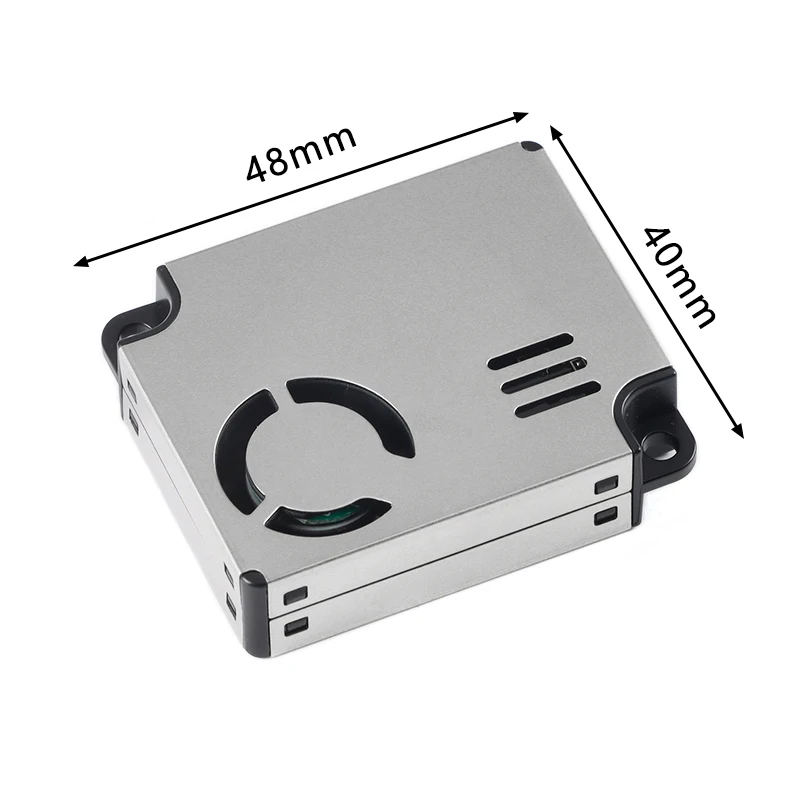
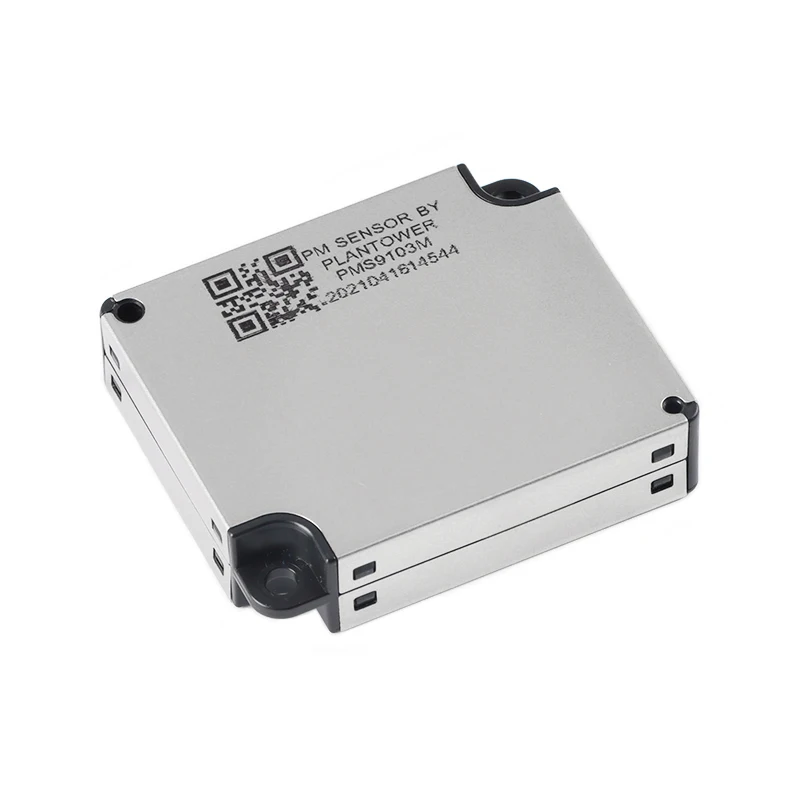
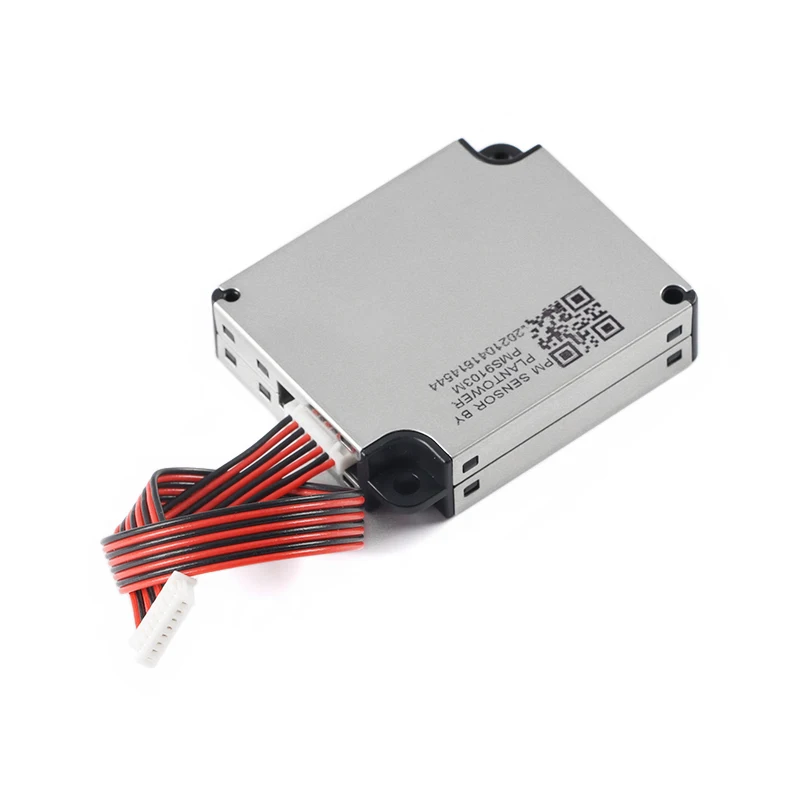
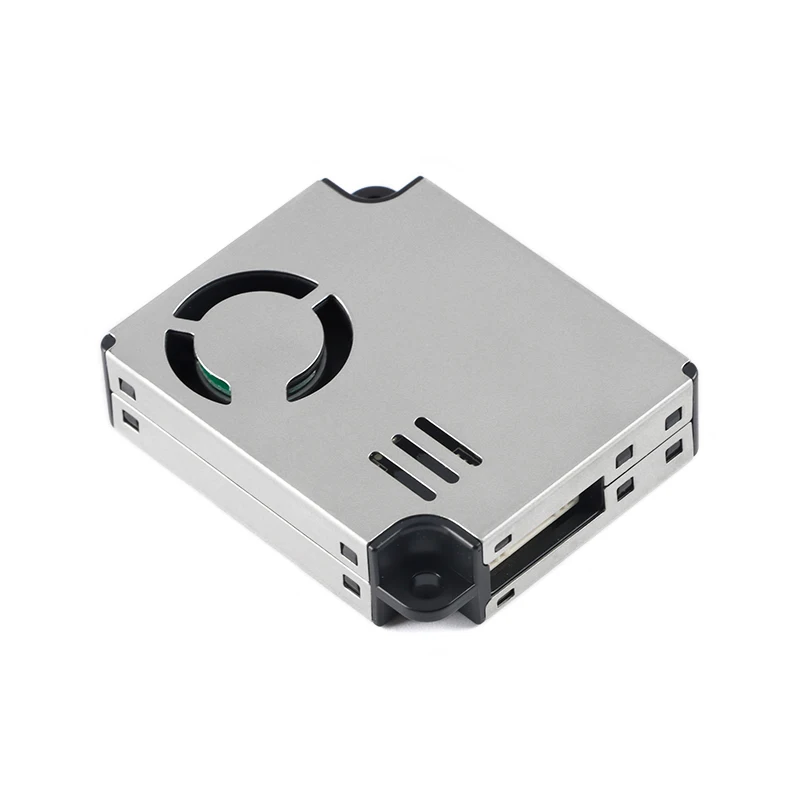
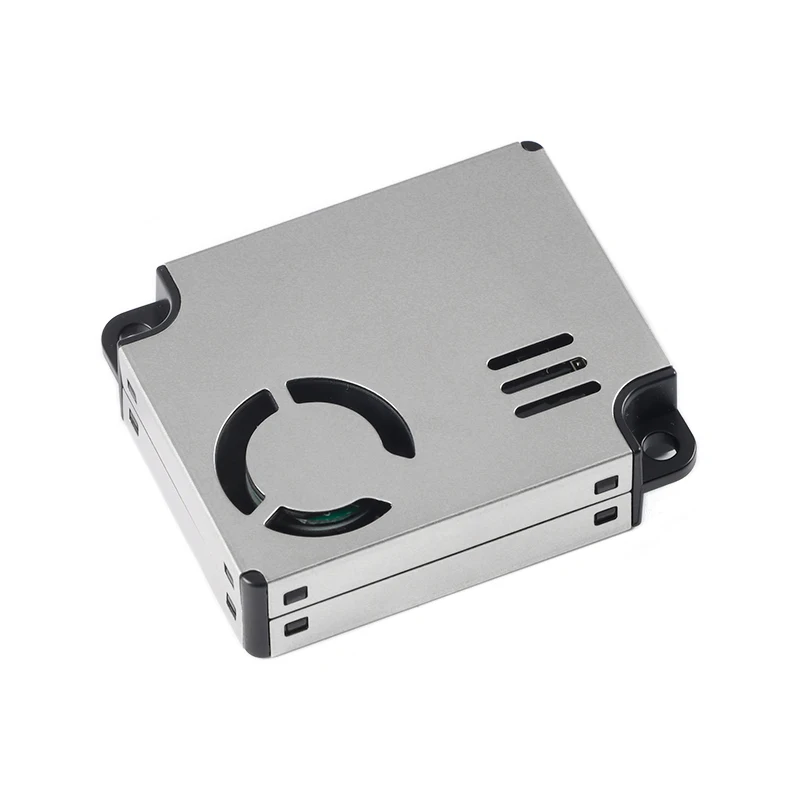
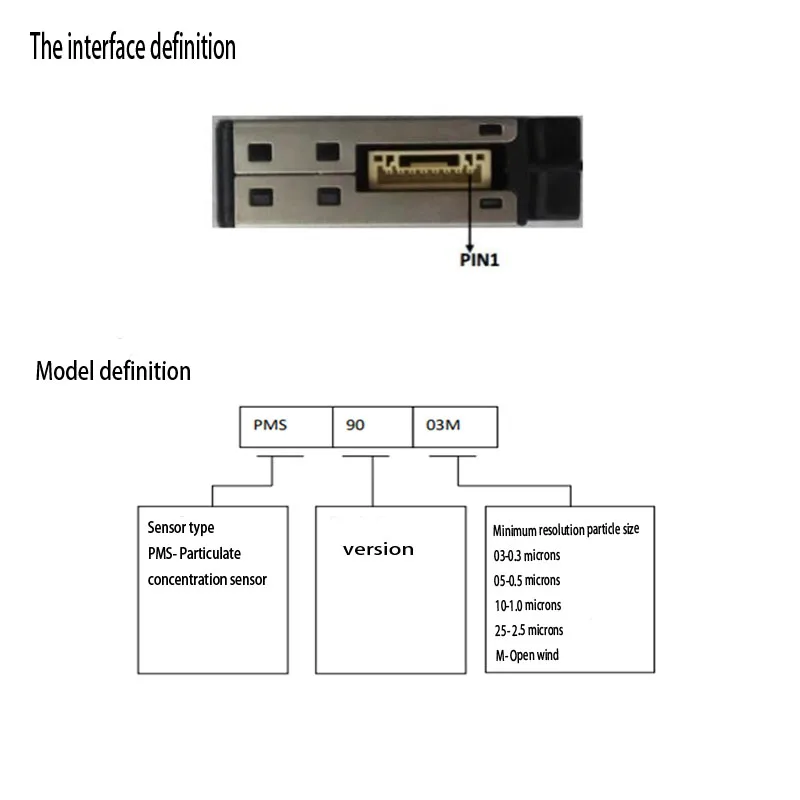
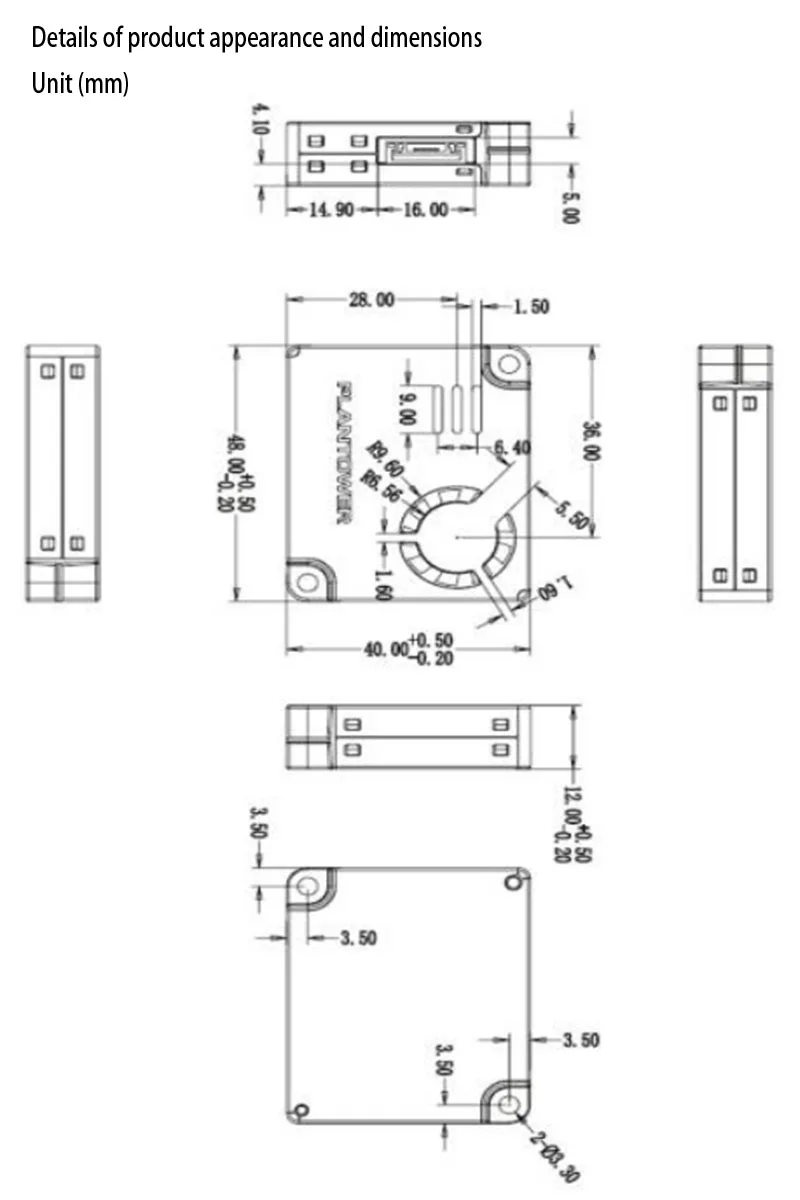
The main features
1. Laser scattering principle to achieve accurate measurement
2. Zero error alarm rate
3. Real-time response and support continuous acquisition
4. Minimum resolution particle 0.3um
5. New structure, six-sided omni-directional shielding, stronger rigid interference performance
6. Ultra-thin and ultra-small design, only 12mm, suitable for portable and wearable devices
7. Real-time output of temperature and humidity data
An overview of the
PMS9003M is a universal digital particle sensor, on the basis of the principle of laser scattering can continuous acquisition per unit volume and calculate the number of different particle sizes of suspended particles in the air, the particle concentration distribution, and conversion into mass concentration, temperature and humidity sensor embedded integrated detection chip, particle concentration and temperature values merge output in the form of general digital interface, the sensor can be embedded in a variety of instruments associated with concentration of suspended particles in the air or environment to improve the equipment, the concentration of providing timely and accurate data.
The working principle of
The sensor adopts laser scattering principle, if laser scattering produces on the suspended particles in the air, at the same time collecting light output at a specific Angle, to get the curve of the scattering light changes over time, and then the theory of using microprocessor based on MIE (MIE) algorithm, it is concluded that the equivalent grain size of particles of different size particles per unit volume and quantity.
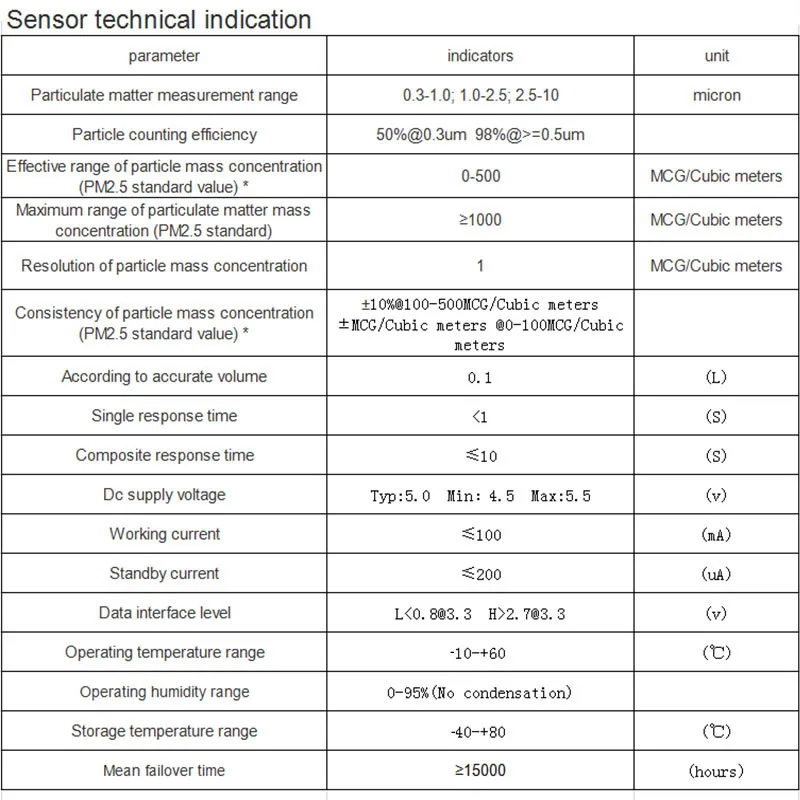
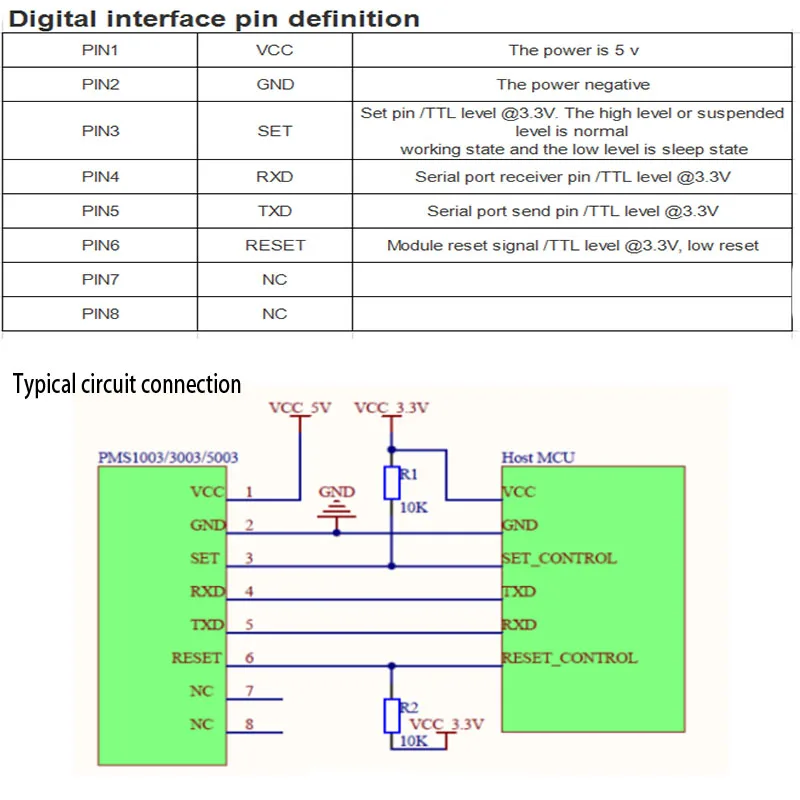
The output
The main output is the mass and number of particulate matter in each concentration per unit volume. The unit volume of the number of particulate matter is 0.1 l, and the unit mass concentration is: microgram/cubic meter.
The output can be divided into two states: active output and passive output. After the sensor is powered on, the default state is active output, that is, the sensor actively sends serial data to the host at a time interval of 200-800ms. The higher the concentration of particulate matter in the air, the shorter the time interval, the active output can be divided into two modes:Stationary mode and quick mode, particle concentration in the air changes is small, the sensor output for a smooth mode, three times per output the same set of values, with the actual data update cycle is about 2 s, when the particle concentration in the air change is bigger, the sensor output automatically switch to a fast mode, each time has the new numerical output, the updating cycle of actual data for 200-8200 ms.